


“Ousu-doji” — born through a collaboration with Fushimi Ningyo Tanka.
Body: W. 5.5 cm × H. 11.5 cm × D. 3.5 cm
Outer box: W. 11.0 cm × H. 13.5 cm × D. 11.0 cm
Weight: approx. 116g
Material: Clay
[Please check before purchasing]
・This is a fragile item. Please handle with care.・Each piece is individually handmade, so slight variations in color, shape, and facial expression may occur.
Fushimi Ningyo Tanka
Ousu-doji
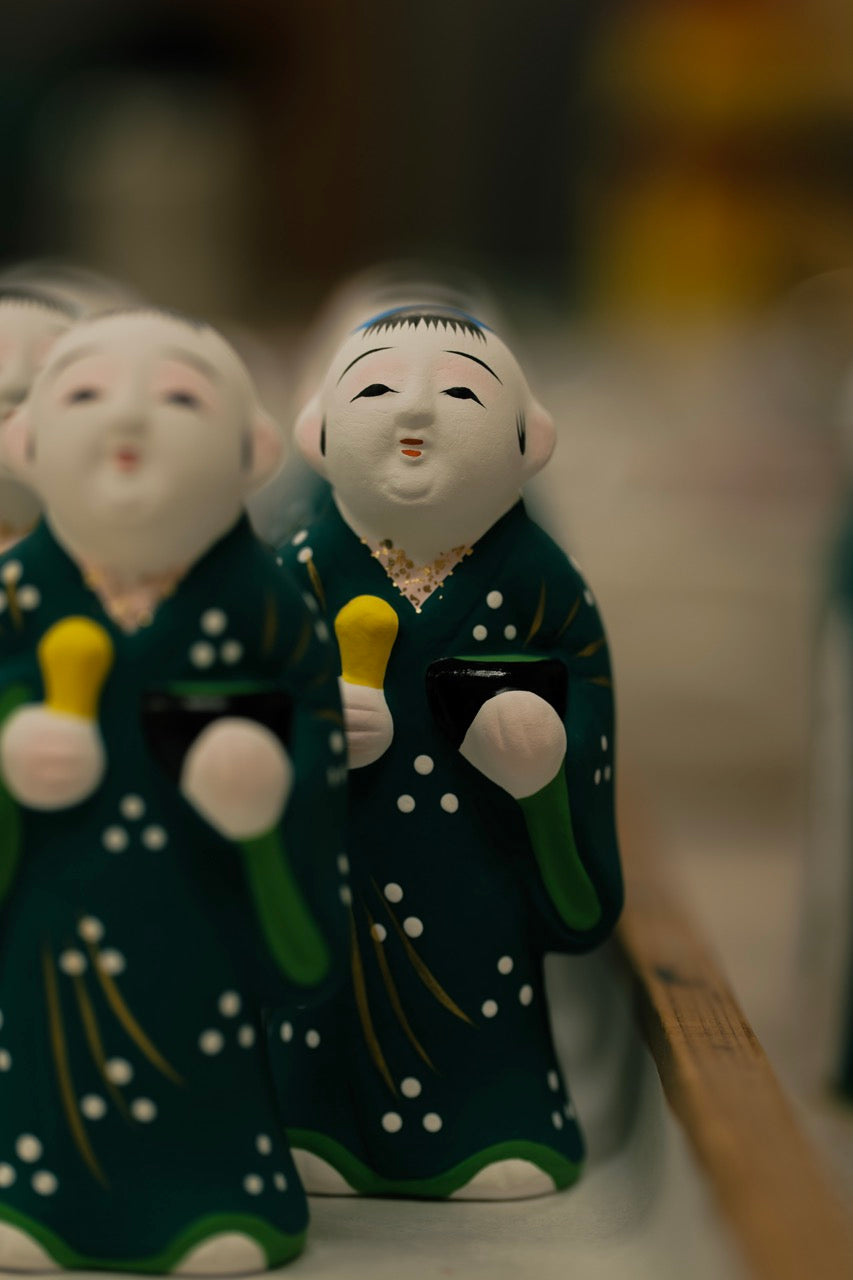
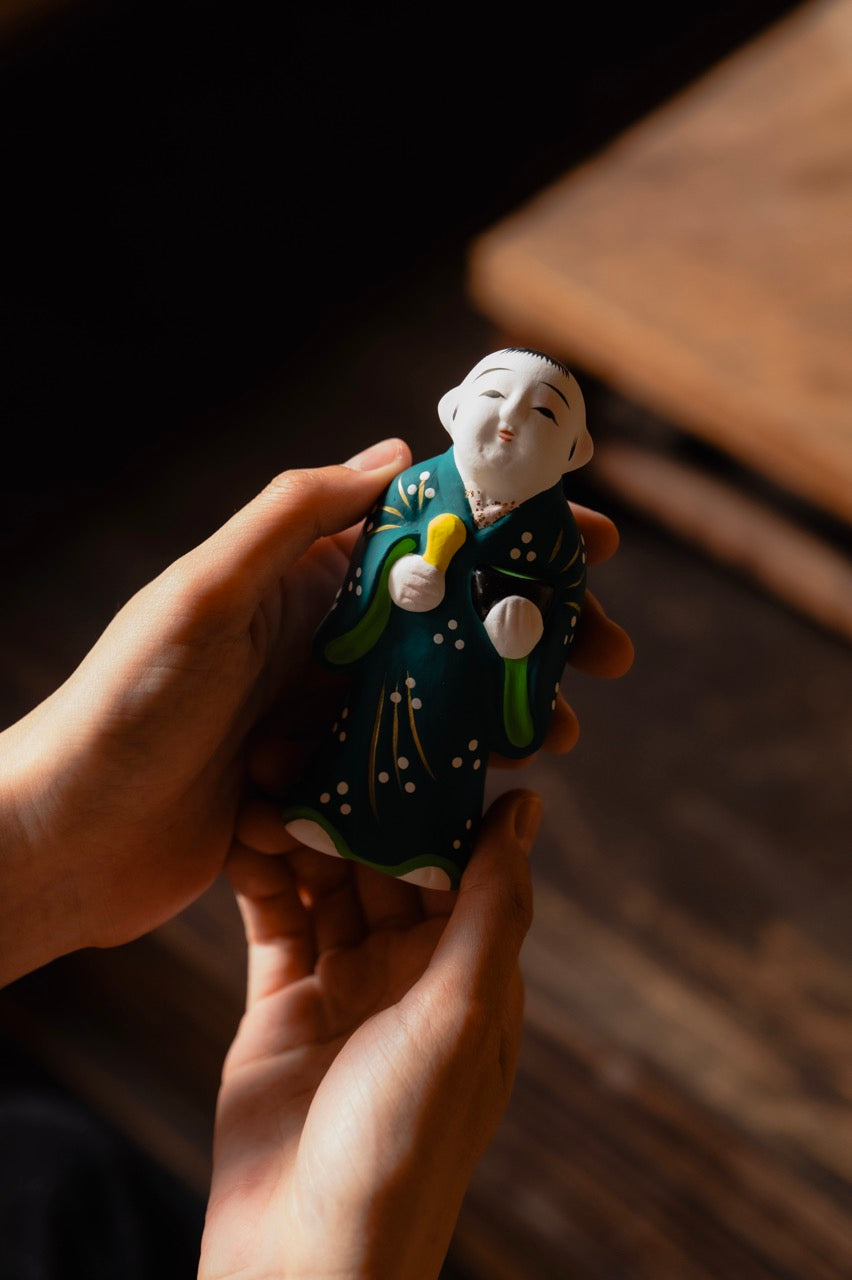
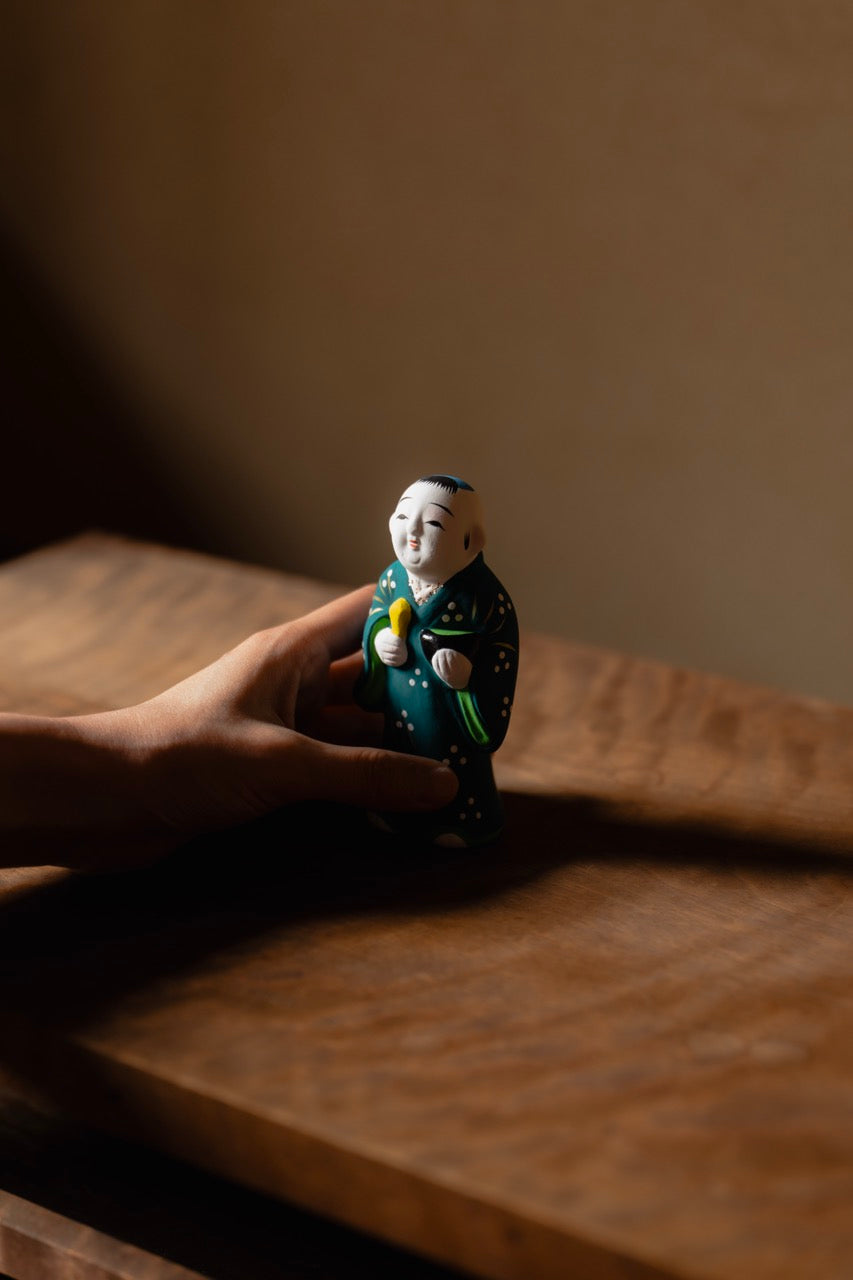
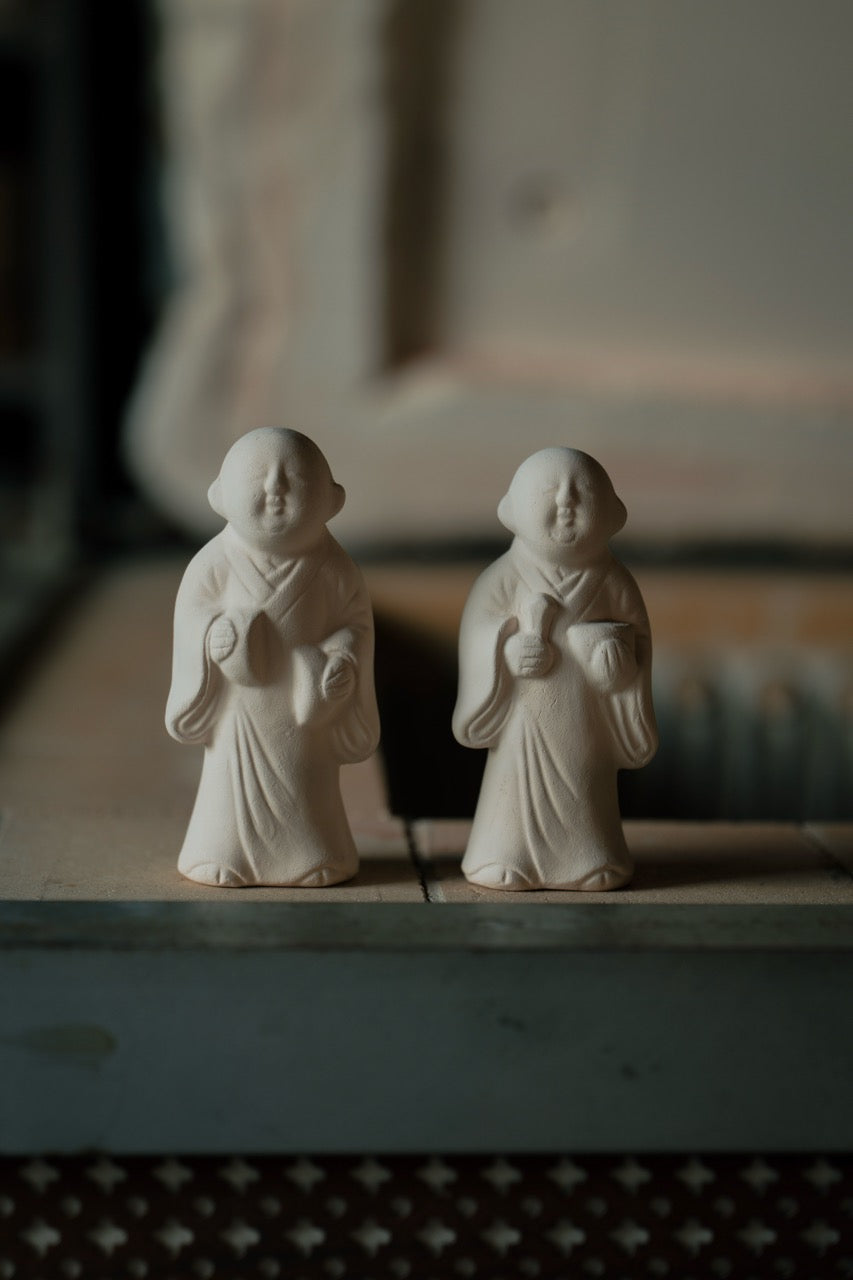
In this collaboration with Tanka, we created a new child figure based on an existing Fushimi Ningyō mold known as Manjū-kui — a traditional child figure depicted holding and eating a steamed bun.
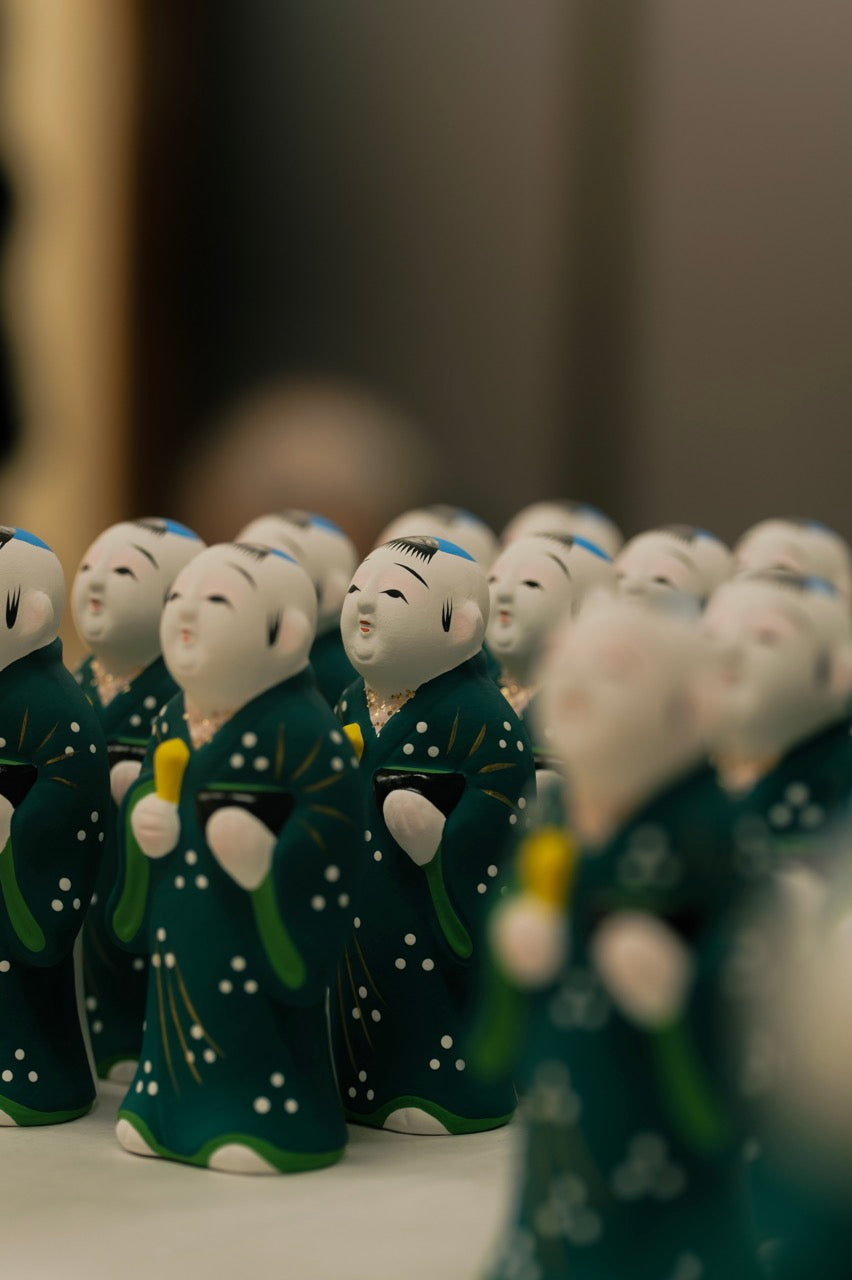
The steamed bun once held in the child’s hands was replaced with a bowl of matcha and a bamboo whisk.
Thus, Ousu-dōji was born — a small child figure quietly preparing a bowl of matcha.
Within that gesture resides the gentle atmosphere of a tea moment.
Throughout Japanese culture, child figures have long been cherished as symbols of playfulness and prayer.
Innocent, yet somehow mysterious, they are often seen as beings that exist between the human and the divine.
We also engaged in careful dialogue with Tanka regarding the colors and details of the figure.
The tea bowl was finished in a deep black reminiscent of Kuro-Raku tea bowls — hand-formed black Raku ware traditionally associated with the Japanese tea ceremony — while the robe was painted in a deep green tone.
Subtly placed upon it is the map symbol representing tea fields.
The folk craft tradition of Fushimi and the tea culture of Uji —
two cultures nurtured within Kyoto quietly overlap within the small figure of this child.
Though small enough to fit within the palm of one’s hand,
it may, when it unexpectedly catches your eye, gently remind you of a quiet moment shared with tea.
Perhaps this child, too, quietly watches over the time and space of Iori.
The Story of Development
“Ousu-doji” — born through a collaboration with Fushimi Ningyo Tanka.
Sadayuki Onishi
Fushimi Ningyō Tanka
This time, we were approached by Horii Shichimeien with the idea of creating a figure themed around Japanese tea, particularly matcha.
That conversation eventually led to the creation of Ousu-dōji. What left a strong impression on us throughout the process was that they were not simply seeking a completely original or entirely new figure.
They held a deep respect not only for the craft of Fushimi Ningyō itself, but also for the historical molds that have been passed down through generations. At the same time, we could strongly sense their desire to create something new together with Tanka.
Through these ongoing conversations, the idea of transforming the existing Manjū-kui figure into Ousu-dōji gradually emerged.
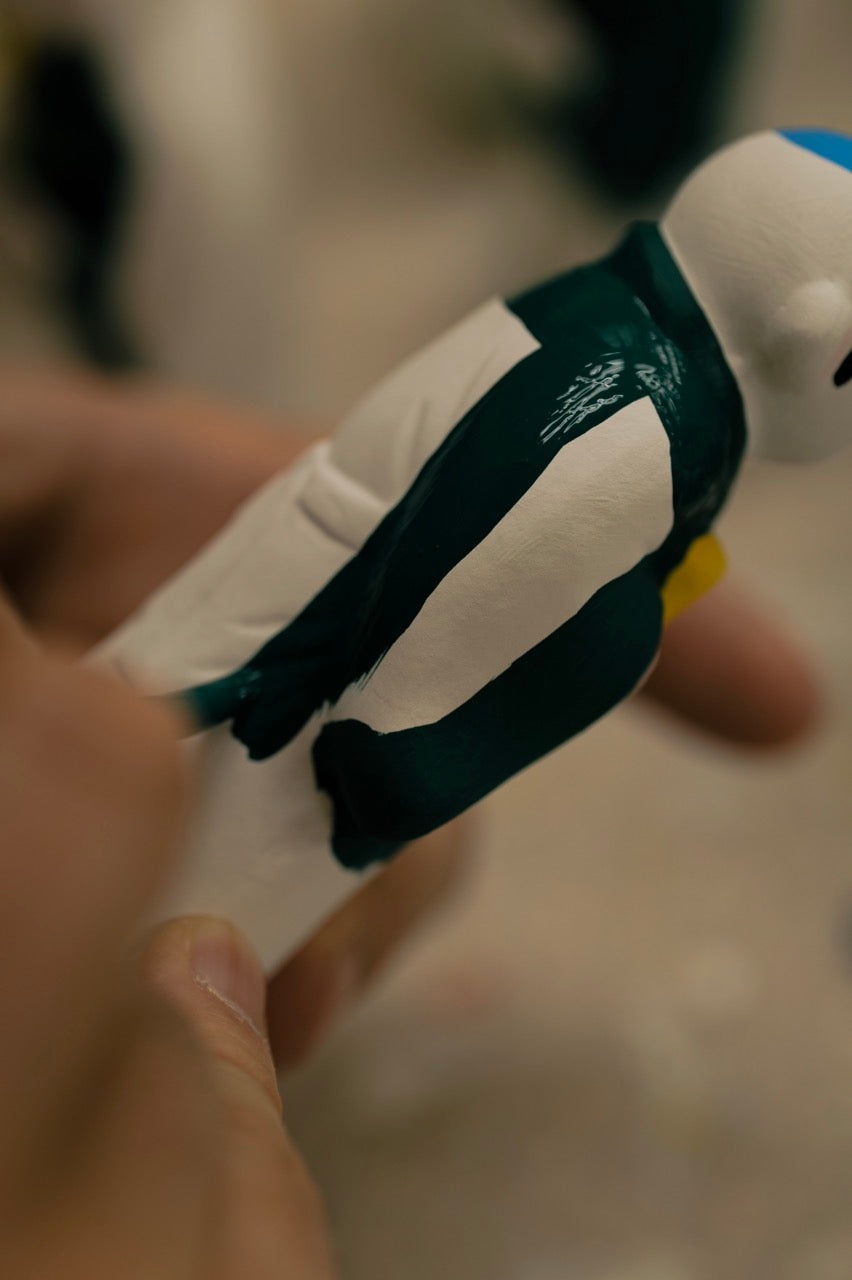
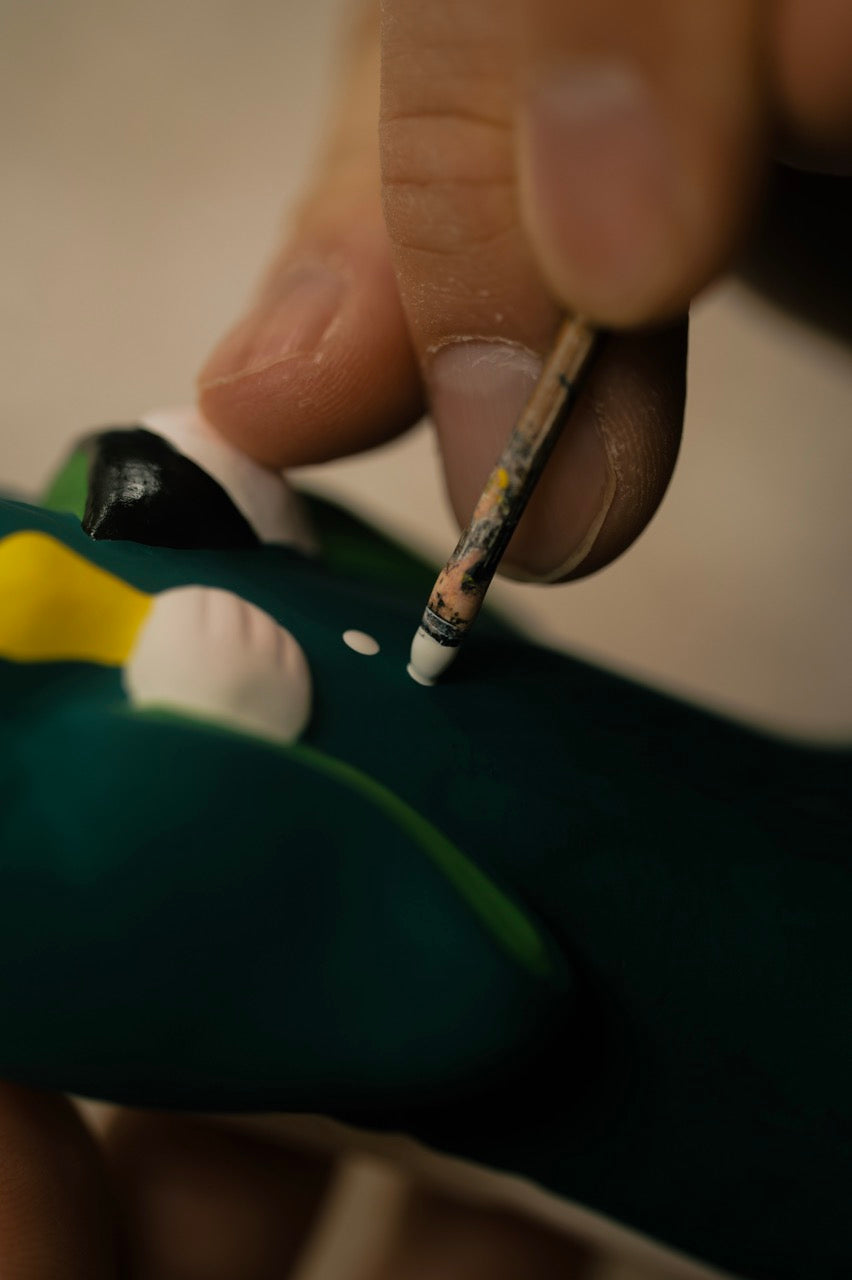
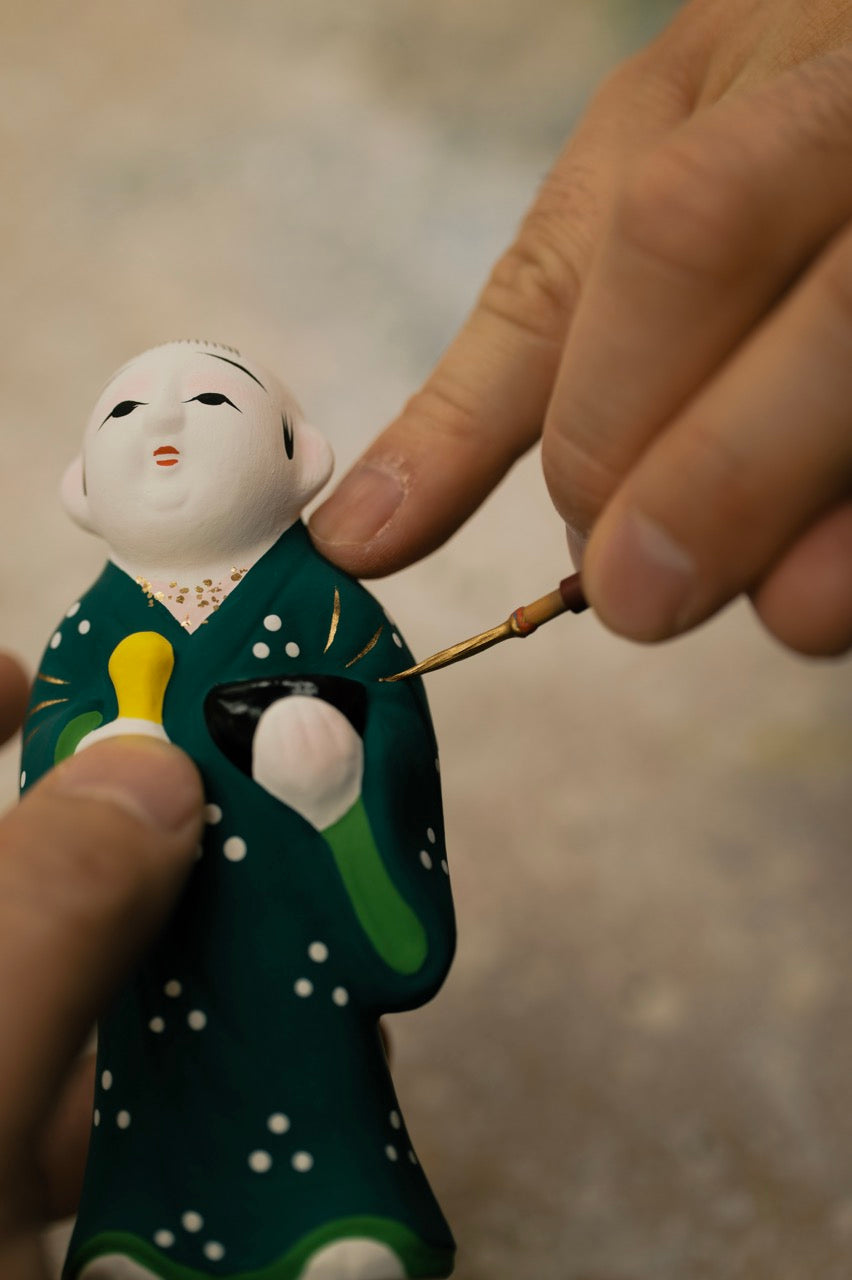
By replacing the steamed bun in its hands with a tea bowl, and transforming the other hand into one holding a bamboo whisk, the figure retained its original charm while taking on a new form — one that quietly exists alongside tea. For that reason, it may not be considered an entirely new creation.
However, within the world of Fushimi Ningyo — where completely new figures are rarely produced — this became a highly unusual and meaningful undertaking.
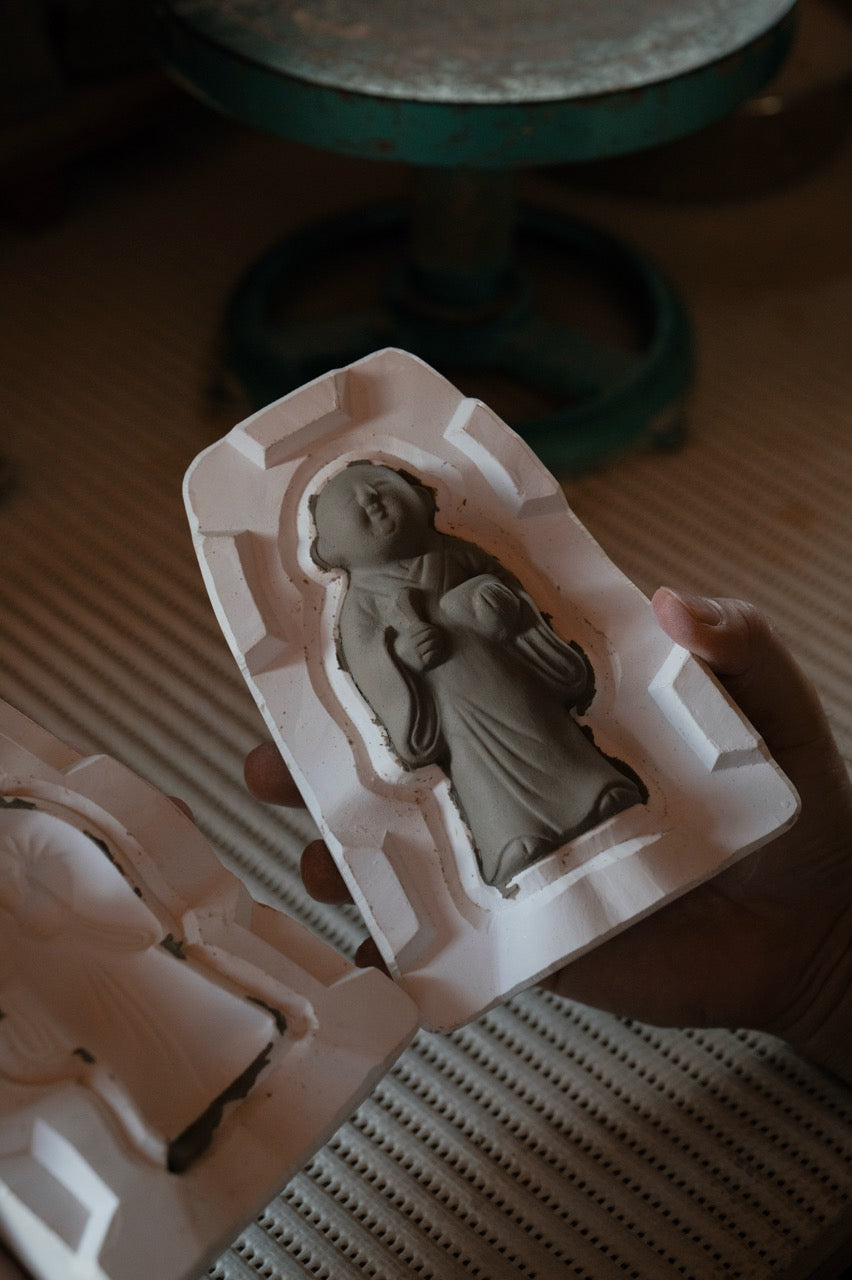
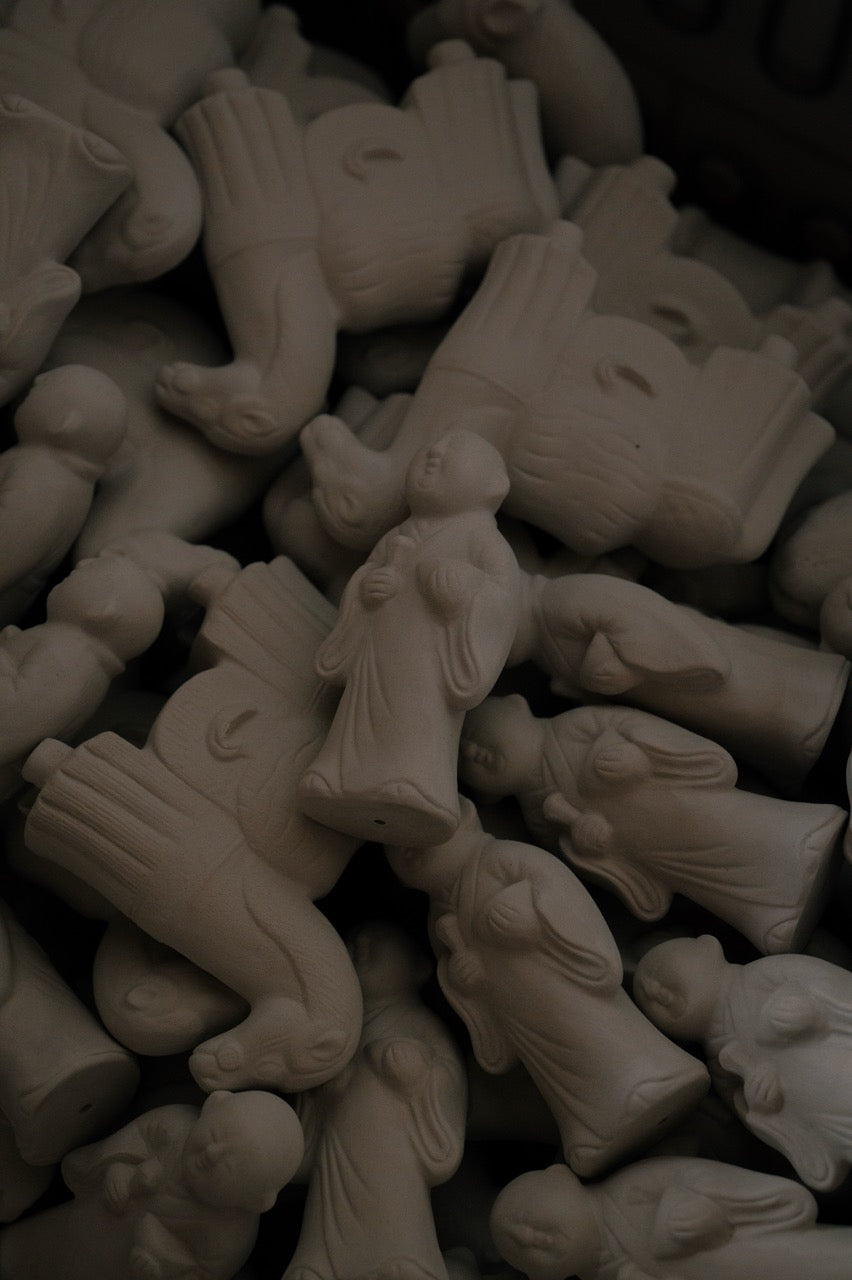
Creating a Fushimi Ningyo figure requires a great deal of time. From adjusting the molds, firing, and applying the gofun base, to the final hand-painting, many careful steps must be completed before a figure is finally brought to life.
Furthermore, the year we began work on Ousu-dōji coincided with preparations for the Year of the Horse, traditionally the busiest zodiac year in our workshop. Horse figures require significantly more detailed painting than many other zodiac figures, such as the snake or sheep, often multiplying the amount of work several times over.
They are also especially popular each year, resulting in a dramatic increase in production volume and making the workshop extraordinarily busy.
Under such circumstances, we often wondered whether this project could truly be realized. Yet, encouraged by the relationship that had grown over time, and by Mr. Horii’s passion — repeatedly visiting our workshop in person — Ousu-doji ultimately came into being.
We hope this figure may exist quietly alongside the gestures of preparing tea. It would bring us great joy if it could be placed somewhere within your tea space, gently catching your eye from time to time.
Sadayuki Onishi
Fushimi Ningyo Tanka
Fushimi Ningyo Tanka Ousu-doji
Fushimi Ningyo Tanka
Fushimi Ningyō are traditional folk clay figures passed down in Kyoto’s Fushimi district.
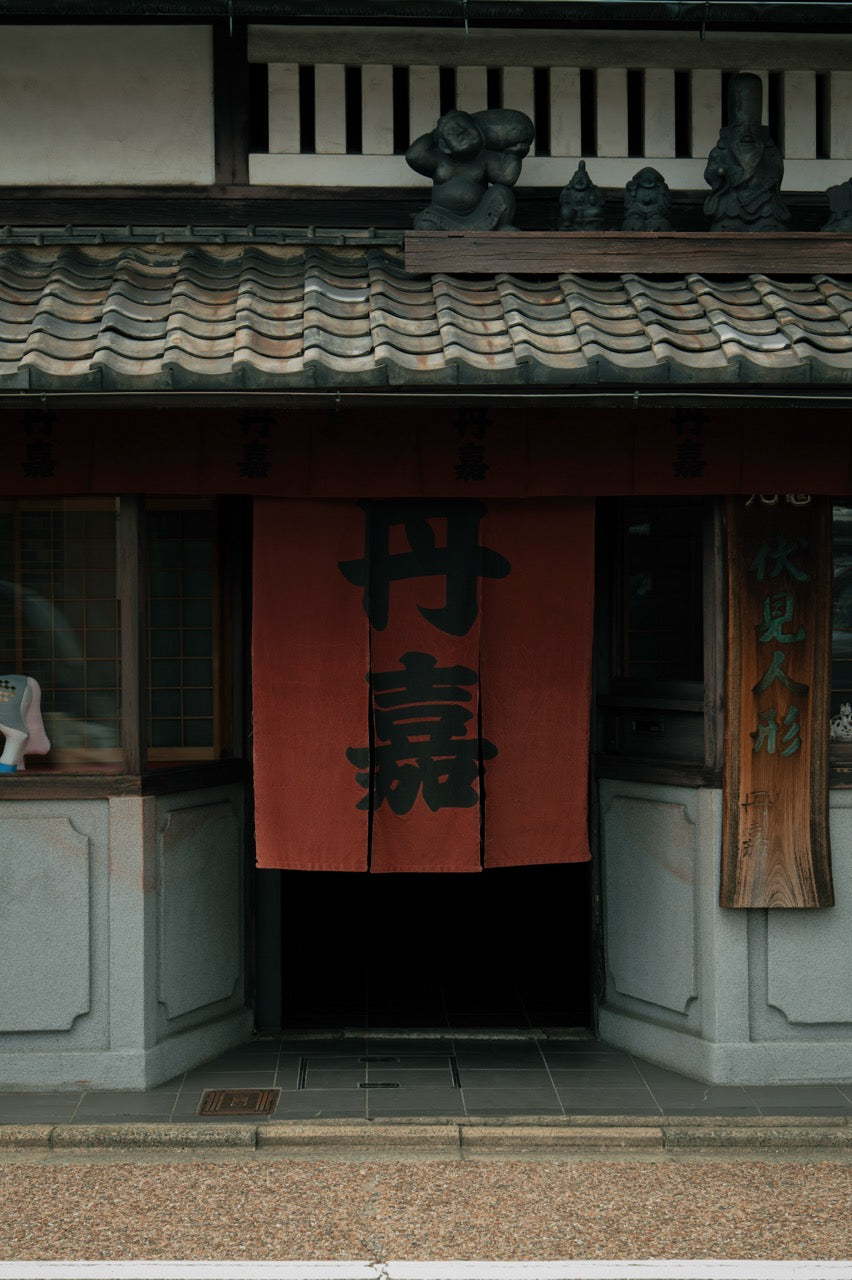
Since the Edo period, these figures have been cherished within everyday life — as souvenirs for travelers, toys for children, and auspicious objects carrying prayers and wishes. The kiln preserving and continuing this lineage today is Fushimi Ningyo Tanka.
Since its founding in the Horeki era (mid-18th century), Tanka has continued to create each figure by hand while carefully preserving the molds inherited across generations. Fushimi Ningyō are characterized by their simple and unembellished forms, distinct from realism.
Yet within these modest shapes quietly reside the memories, prayers, and everyday lives of ordinary people.
Their expressions — at once gentle, charming, and open-hearted — have comforted people across generations.
In many ways, they represent a small form of faith that has long lived within everyday Japanese life.
庵 -Iori- by Horii Shichimeien
Iori is a brand inspired by the idea of “a small tea hermitage, quietly open within modern life.” It gently weaves together the aesthetic spirit of authentic Japanese craftsmanship —honmamon — with our own contemporary sensibilities.
Guided by the spirit of fueki-ryūkō — the timeless held in harmony with the new — Iori stands softly between Japan and the world, practicality and poetry, breathing a fresh, modern expression into objects nurtured through generations.
Since our founding in 1879, we have devoted ourselves to the craft of tea. Through this long engagement with tea-making, we have cultivated a spirit — a way of approaching creation, and an aesthetic sensibility rooted in tea culture.
This spirit forms the foundation of Iori. With it as our quiet backbone, we shape products that gently accompany the cadence of contemporary living.
Fushimi Ningyo Tanka
Ousu-doji
¥14,850


